

Castor for Fertility Clinics: Offline AI That Manages IVF Cycles and Embryo Records Without Cloud Risk
Fertility data is among the most sensitive PHI a clinic holds. Castor runs entirely on local hardware, tracking IVF stim cycles, embryo records, and insurance prior auths without a single token of patient data leaving the clinic.

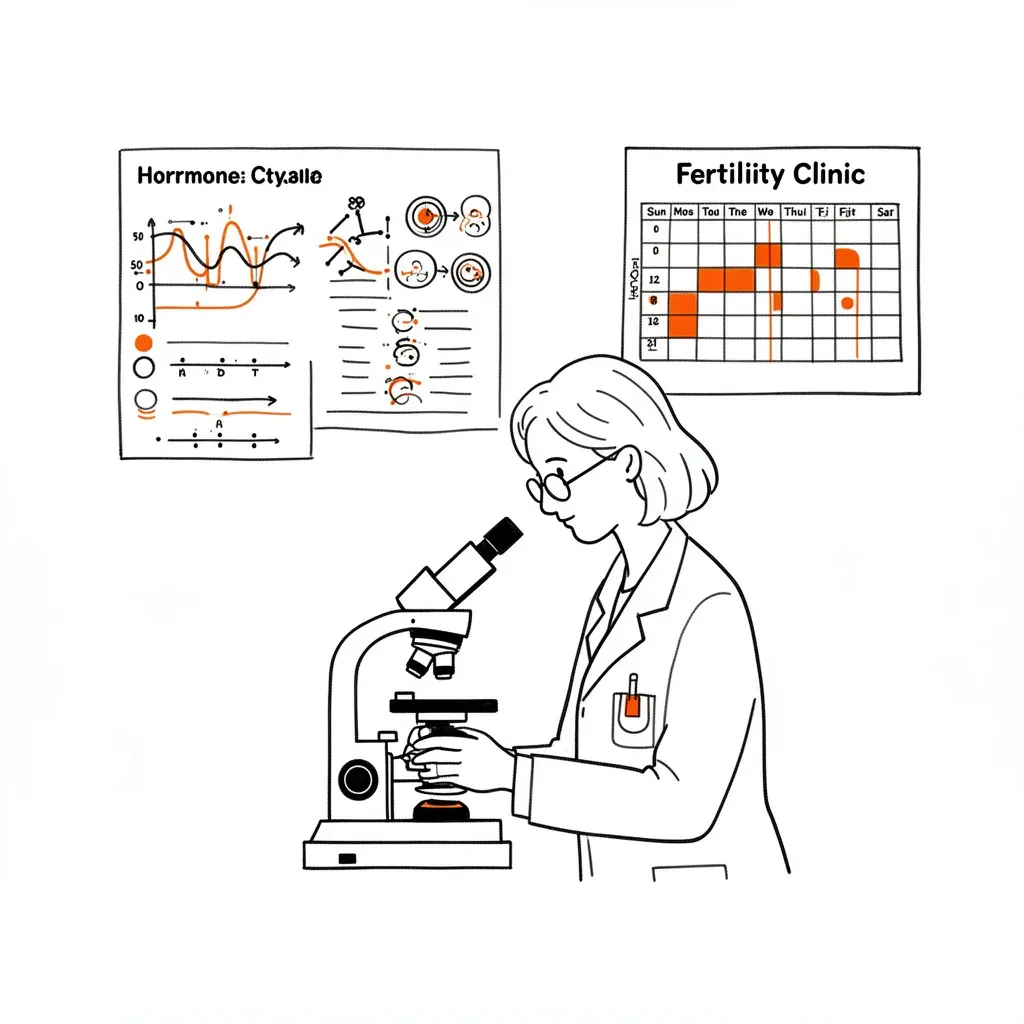
Fertility data is among the most legally and personally sensitive health information a clinic can hold. Stimulation cycle logs, embryo grades, PGT-A genetic results, cryopreservation inventories — all of it is PHI, and since the Dobbs decision, reproductive health records have become a direct legal liability in states that restrict reproductive procedures. Most fertility practices still store this data in cloud-based EHRs built for general medicine, not for the unique compliance needs of reproductive endocrinology.
Castor is a local AI agent that runs entirely on a clinic's own hardware — no cloud, no API keys, no third-party servers with access to patient records. It ingests your cycle documents, tracks monitoring data, automates insurance prior auth, and delivers alerts via Telegram, all without a single token of patient data leaving the building. This post walks through exactly how a small fertility practice — a solo REI, a boutique IVF clinic — can deploy Castor and eliminate hours of manual documentation work every cycle day.
Why Reproductive Data Needs Stronger Offline Protection Than Standard PHI
HIPAA covers fertility records the same as any other medical data. But reproductive health information carries additional exposure vectors that general HIPAA guidance doesn't address:
- State law conflicts post-Dobbs. In states with trigger laws, detailed reproductive treatment records — cycle dates, embryo creation logs, cryopreservation inventories — can be subpoenaed in criminal investigations. Cloud vendors operating in those states may be compelled to produce records. A local-only system produces nothing to compel.
- PGT genetic data. Preimplantation genetic testing (PGT-A, PGT-M, PGT-SR) generates genetic profiles linked to identified individuals. Genetic data carries its own regulatory layer (GINA, state genetic privacy laws) and cannot be recovered or de-identified once breached.
- Third-party reproduction complexity. Donor egg, donor sperm, and gestational carrier cases involve multiple legal parties. Each party's identity and medical data must be siloed. Multi-tenant cloud EHRs often lack the granularity for this separation.
- Breach severity. A fertility record breach is not a billing data breach. It can expose infertility, genetic conditions, or reproductive decisions the patient has never disclosed to family, employer, or insurer.
Running Castor offline removes the cloud breach vector entirely. The data stays on a machine the clinic controls, encrypted at rest, with no external API calls during normal operation.
The Documentation Burden at a Small Fertility Practice
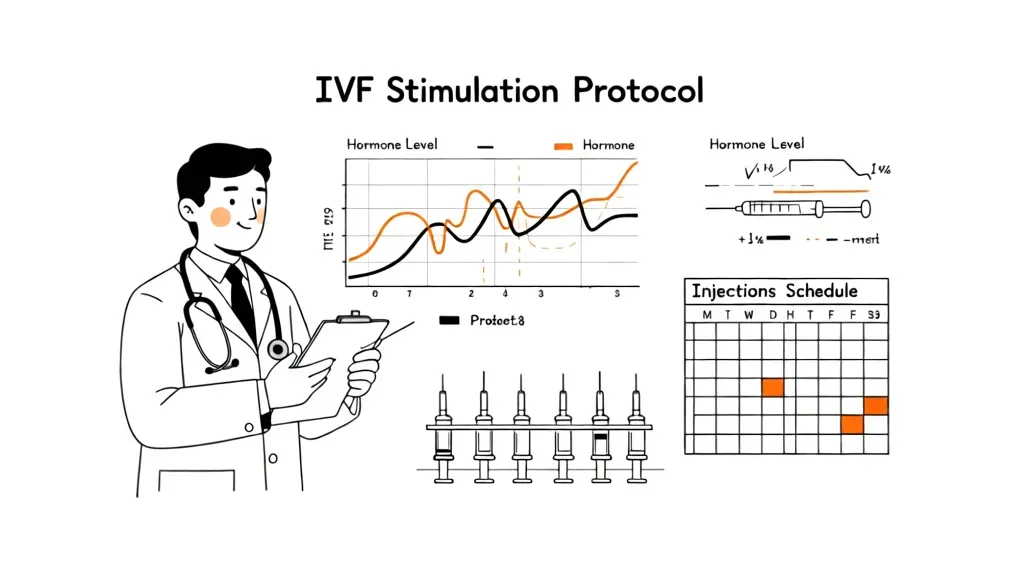
An IVF cycle generates more documentation per patient per week than most other specialties generate per patient per year. Consider a single fresh IVF cycle:
- Baseline visit: AFC count, antral follicle sizes, E2/FSH/LH/AMH basins, uterine cavity assessment
- Stimulation monitoring (typically days 5, 7, 9, 11): Follicle measurements per ovary (6–20 individual measurements per visit), E2, P4, LH values, injection dose adjustments
- Trigger decision documentation: Lead follicle sizes, E2 level, trigger type (hCG, Lupron, dual trigger), trigger time to the minute
- Retrieval report: Number of eggs retrieved, maturity (MII, MI, GV), fertilization method (IVF vs. ICSI)
- Fertilization report (Day 1): 2PN count, abnormal fertilization notes
- Embryo development reports (Days 3, 5/6): Cell count + fragmentation (Day 3), blastocyst grade (expansion + ICM + TE grade), PGT biopsy notes
- PGT-A results: Per-embryo genetic status, mosaicism grades, chromosome abnormality details
- Cryopreservation records: Vitrification date, straw/tank/canister/goblet location, embryo ID, warming thaw survival notes
- FET cycle documents: Endometrial prep protocol, lining measurements, transfer date, number and grade of embryos transferred
- Outcome documentation: Beta hCG results, clinical pregnancy confirmation, OB handoff summary
A busy single-physician REI practice with 20 active stimulation cycles per month generates hundreds of discrete data points per week, most of which must be logged into an EHR that was designed for primary care SOAP notes. Staff spend 2–4 hours per day on documentation that Castor can either automate or assist with in minutes.
How Castor Works in a Fertility Clinic
Castor connects to the clinic via Telegram — the embryologist, nurse coordinator, and physician all use the same bot, with Castor maintaining a persistent memory of every patient's cycle status. The clinic doesn't need a new software platform. Castor works alongside the existing EHR as an intelligent assistant layer.
File ingestion. Castor reads PDFs, lab fax reports, DICOM-exported ultrasound measurement sheets, PGT lab reports, and insurance letters using its 50+ format document parser. Drop a file into the Telegram conversation and Castor parses it, extracts the relevant values, and stores them in the patient's memory profile.
Memory system. Castor's 3-layer memory (raw facts → entity extraction → synthesized wiki-style pages) means it builds a living summary of every patient's current cycle. Ask "What is Mrs. Chen's E2 today and how does it compare to her last cycle?" and Castor answers from local memory — no lookup, no EHR navigation.
Scheduled monitoring reminders. Set natural-language schedules: "Remind me every morning at 7 AM to check for pending monitoring results" or "Alert me if any patient's E2 hasn't been logged by noon on monitoring days." Castor runs these checks locally and pushes Telegram alerts.
Browser automation. For insurance portals, Castor uses Playwright-based browser automation to navigate payer websites, pull benefit details, and submit prior auth requests — all without sharing patient data with a third-party RPA cloud service.
Stimulation Monitoring: Daily Cycle Tracking Without Manual Spreadsheets
Most small fertility practices track stimulation cycles in spreadsheets or in the notes field of a general-purpose EHR. Neither is searchable, neither sends alerts, and neither spots patterns across cycles. Castor changes this without requiring a new system.
Here's the workflow a nurse coordinator can run on a monitoring morning:
- As each patient's ultrasound and labs come in, the coordinator messages Castor: "Patient Chen Day 7: left ovary 14mm, 13mm, 11mm; right ovary 16mm, 14mm, 12mm, 10mm. E2 = 1,840."
- Castor logs this to the patient's memory profile, acknowledges receipt, and compares to her Day 5 values.
- If the response looks like a potential OHSS risk (E2 trajectory + follicle count), Castor flags it: "E2 increased 3.1× from Day 5. Lead follicle 16mm. Consider coasting protocol or dual trigger planning."
- At 5 PM, Castor sends an automated summary to the physician via Telegram: all monitoring patients, their current lead follicle sizes, E2 values, and a triggered alert list for any that need dose adjustment or trigger planning.
This eliminates the end-of-day phone tag between nurse and physician that costs 30–45 minutes on every monitoring day.
Prior Authorization for Fertility Treatments: The 3-Hour Task Castor Handles in 20 Minutes
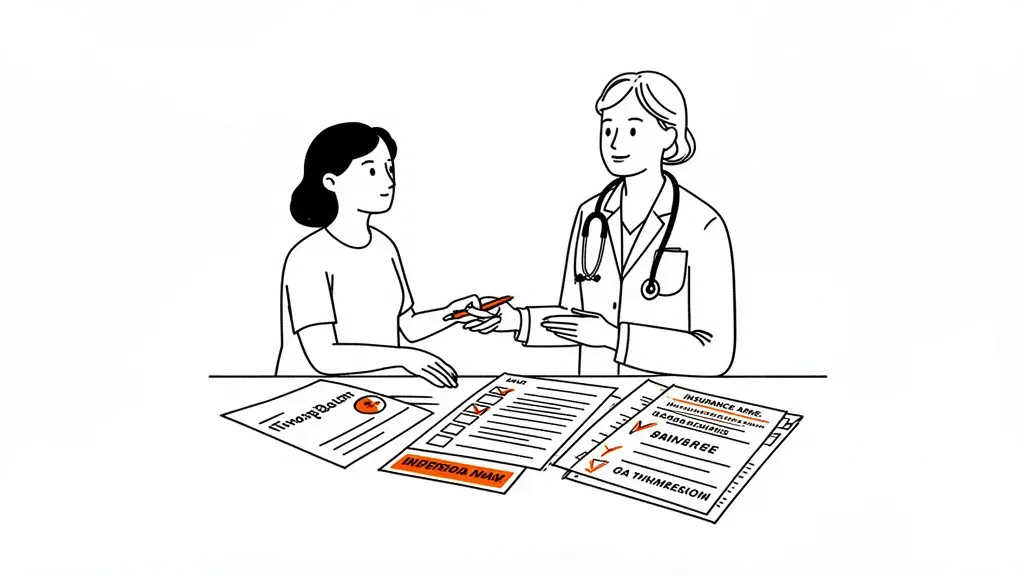
Fertility prior authorization is notoriously complex. Most commercial plans require step therapy (documentation of failed IUI cycles before IVF authorization), medical necessity letters from the REI, cycle limits per calendar year, and separate authorizations for PGT. Castor automates the entire workflow:
Benefit Verification
Ask Castor: "Verify fertility benefits for patient Chen, Aetna plan ID 123456789." Castor uses browser automation to navigate Aetna's provider portal, extract the fertility benefit details (IUI/IVF cycle maximums, diagnostic code requirements, in-network lab requirements for PGT), and return a structured summary to the Telegram chat — without the coordinator spending 40 minutes on hold.
Medical Necessity Letter Generation
Once Castor has the patient's diagnostic history in memory (AMH, AFC, FSH, prior IUI outcomes, diagnosis codes), it drafts a medical necessity letter in the format the payer requires — including the specific CPT codes, diagnosis codes, and clinical justification language that survives first-pass review. The physician reviews and signs; Castor handles the formatting.
Prior Auth Submission Tracking
Castor tracks pending authorizations on a scheduled basis. Set a routine: "Every weekday at 9 AM, check the status of all open prior auth requests and alert me to any approved, denied, or requiring additional documentation." Castor navigates the payer portals, reads the status pages, and reports via Telegram — no manual portal-checking by staff.
Denial Appeals
When a PA is denied, Castor drafts the appeal letter using the patient's clinical record in memory, the specific denial reason code, and the appropriate clinical criteria language (ASRM guidelines, peer-reviewed citations for the indication). First-level appeals written with proper clinical citations have significantly higher success rates than standard form letters.
Cryopreservation Inventory Management
Every fertility clinic has the same anxiety: "Where exactly is embryo 3 from the Chen retrieval, and what tank is it in?" Paper cryo logs and EHR notes fields are not designed for the multi-dimensional indexing that cryopreservation requires (patient, cycle, embryo grade, PGT status, tank, canister, goblet, straw).
Castor maintains a local cryo inventory in its memory system. After each vitrification, the embryologist messages: "Chen cycle 2: embryo 4AB PGT-A euploid, vitrified tank 2 canister 3 goblet 2 straw 1." Castor confirms and adds to memory. Before a FET cycle, ask "What euploid embryos does Chen have in storage and where are they?" Castor returns the full inventory instantly — no binder, no spreadsheet navigation.
Annual cryo storage invoices and consents can be tracked the same way. Set a routine to alert the coordinator 60 days before any patient's annual storage renewal, with the patient's current embryo count and storage location in the alert.
Patient Communication Without a Cloud Messaging Platform
Fertility patients are anxious. They want to know their Day 5 report the moment it's available. Most clinics use a cloud-based patient portal or consumer messaging app (which violates HIPAA). Castor provides an alternative: the clinic can set up a patient-facing Telegram bot that delivers result notifications and injection reminders — with Castor generating the messages from local data and the coordinator approving before send.
Injection reminders are critical for gonadotropin cycles. Missing a single dose by more than 2 hours can affect follicular development. Castor can generate a daily reminder schedule for each patient based on their current protocol, timed to the minute, delivered via a Telegram message the coordinator pastes into the patient's communication channel.
What Castor Cannot Do for Fertility Clinics
Castor is a clinical assistant, not an EHR replacement. It cannot write directly to your EHR's database, generate lab orders, or submit claims to payers. The physician still reviews and signs all clinical documents. Castor's role is to eliminate the manual data gathering, logging, formatting, and monitoring tasks that occupy staff time between the clinical decisions a physician must make.
Think of it as a highly capable medical scribe and admin assistant that works in your Telegram, runs on your hardware, and forgets nothing — without ever sending a patient record outside your four walls.
For more on how Castor handles sensitive medical documentation in other specialties, see how it works for psychiatry practices managing controlled substance records and for dermatology clinics tracking biopsy and biologic records. The same offline architecture that protects psychiatric and genetic records protects your IVF cycle data.
Getting Started: What You Need
- Hardware: Any Windows 10/11, macOS, or Linux machine with 8GB+ RAM and a GPU with 4–8GB VRAM (a $700–900 gaming laptop works). Castor supports LM Studio and Ollama for local model serving.
- Model: Qwen 3.5 9B or Gemma 4 E4B (4-bit quantized) run well on consumer hardware. For a solo REI practice with 10–15 active patients, a 9B model is sufficient for all the workflows above.
- Setup time: Roughly 2–3 hours to install Castor, configure the Telegram bot, and run the initial patient imports from your existing records.
- GitHub: github.com/deepfounder-ai/castor
Frequently Asked Questions
Is Castor HIPAA-compliant for fertility clinic records?Castor runs entirely on local hardware with no cloud transmission of patient data during normal operation. This eliminates the cloud vendor breach risk that is the most common source of HIPAA violations. The clinic remains the data controller, and no BAA with a cloud provider is required for the AI functions Castor performs.Can Castor track IVF monitoring data across multiple patients simultaneously?Yes. Castor maintains separate memory profiles for each patient. On a busy monitoring morning with 10–15 patients, the nurse coordinator logs each patient's values in sequence and Castor stores each update in the correct profile. At end-of-day, Castor generates a summary across all active cycle patients with any alerts flagged.How does Castor help with fertility insurance prior authorization?Castor uses browser automation to navigate insurer portals, extract benefit details, and check prior auth status without staff manually logging in. It also drafts medical necessity letters and appeal letters using the patient's clinical history stored in local memory, with the correct diagnosis codes and payer-specific formatting.Can Castor manage frozen embryo cryopreservation inventory?Yes. Castor maintains a searchable local record of cryopreserved embryos indexed by patient, cycle, grade, PGT status, and physical storage location. It responds to natural language queries and sends automated annual storage renewal alerts.Why is offline storage especially important for reproductive data post-Dobbs?In states with restrictive reproductive laws, IVF cycle records and embryo creation logs can be subpoenaed. Cloud vendors operating in those states can be legally compelled to produce records. A local-only system on hardware the clinic controls cannot be remotely accessed without a direct physical order — a significantly higher barrier.