

Castor for Home Health Agencies: Offline AI That Documents Every Patient Visit Without Cloud Risk
Home health agencies collect HIPAA-protected patient data at the bedside every day. Castor runs fully offline — no cloud, no PHI exposure — handling EVV compliance, SOAP notes, medication records, and Telegram-based care coordinator alerts.

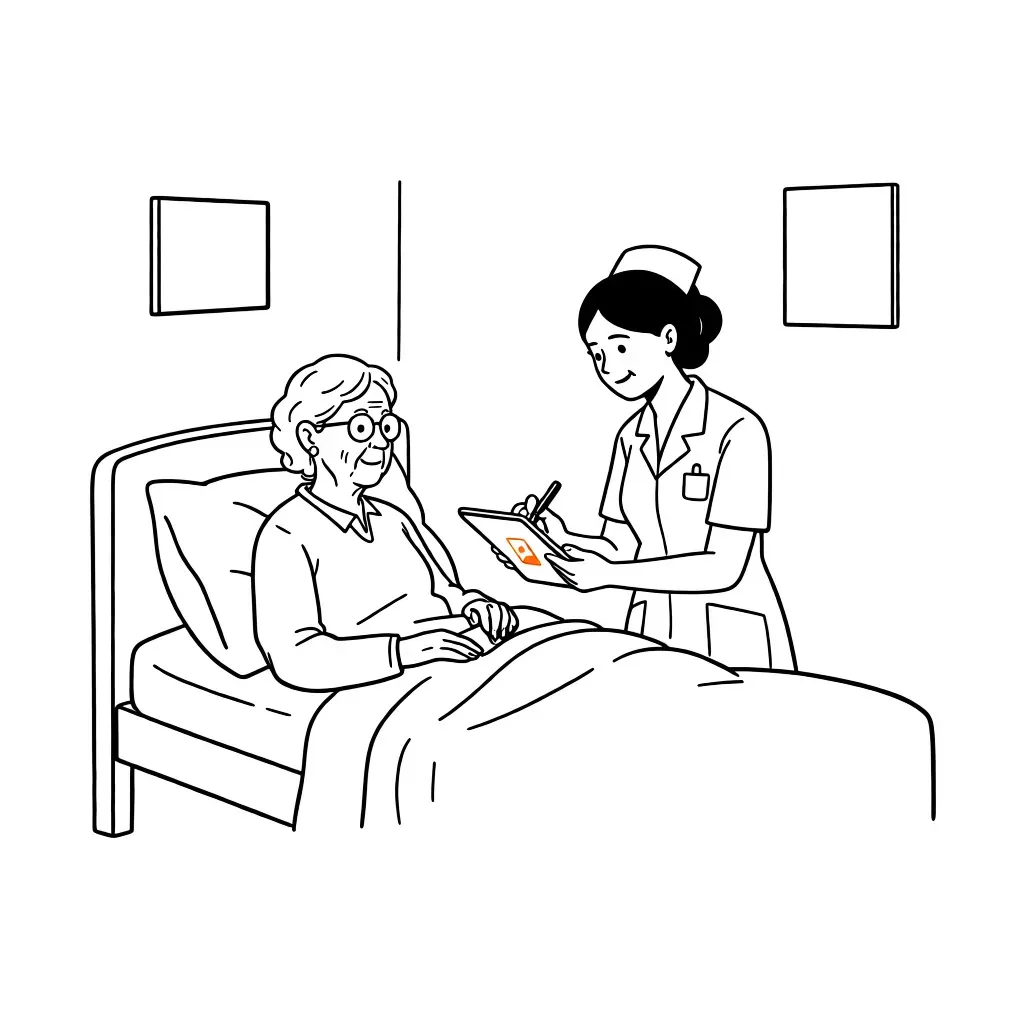
Home health agencies carry HIPAA-protected patient data into people's living rooms every single day. Skilled nursing notes, medication administration records, vital signs, OASIS assessments — all of it collected at the bedside, often on a nurse's personal tablet, over a spotty LTE connection. The standard answer has been cloud-based EHR software, which means patient PHI traveling to servers you don't control the moment a field nurse hits "save." Castor is a different answer: a personal AI agent that runs entirely on local hardware, no cloud, no API keys, no internet required — so every patient record stays on your machine.
This post covers exactly how a home health agency can use Castor to handle visit documentation, EVV compliance tracking, medication records, and care coordinator alerts without exposing a single byte of PHI to outside servers.
Why Home Health Agencies Can't Afford Cloud AI Risk
The home health setting creates HIPAA exposure points that most cloud EHR vendors don't fully address. Field nurses connect from patient homes — public WiFi, shared routers, compromised networks. A cloud-synced app uploads PHI across every one of those connections. One man-in-the-middle attack, one misconfigured S3 bucket, one vendor breach, and your agency faces a $100K–$1.9M OCR fine under HIPAA's tiered penalty structure.
Beyond breach risk, home health agencies face specific regulatory requirements that add documentation overhead:
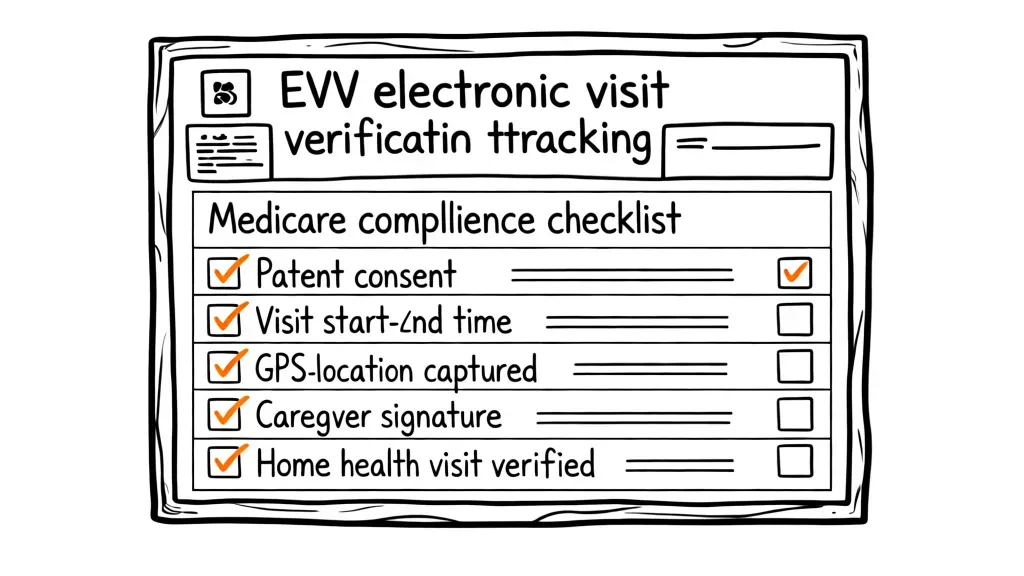
- Electronic Visit Verification (EVV) — The 21st Century Cures Act requires real-time visit verification for Medicaid personal care and home health services. Every visit needs: patient name, service type, date, location, start/end times, and clinician ID.
- OASIS assessments — Medicare requires the Outcome and Assessment Information Set at admission, recertification, discharge, and significant change in condition. Each OASIS contains 100+ data elements.
- 485 Plan of Care — Physician-signed, updated every 60 days. Missing a recertification window means non-billable visits.
- Medication Administration Records (MAR) — Every administered medication requires documentation: drug, dose, route, time, nurse signature.
That documentation burden — combined with frequent connectivity gaps in rural or basement patient homes — makes "always-online cloud EHR" a poor fit for field staff. Castor runs entirely on a laptop or workstation at the agency office, ingesting visit notes from field staff via Telegram and maintaining a local, encrypted knowledge base of every patient in your caseload.
What Castor Handles for Home Health Documentation
Castor's 46-tool system includes document ingestion, structured note generation, and a hybrid vector + BM25 search across your local patient memory. Here's how a typical home health workflow runs:
Skilled Nursing Visit Notes
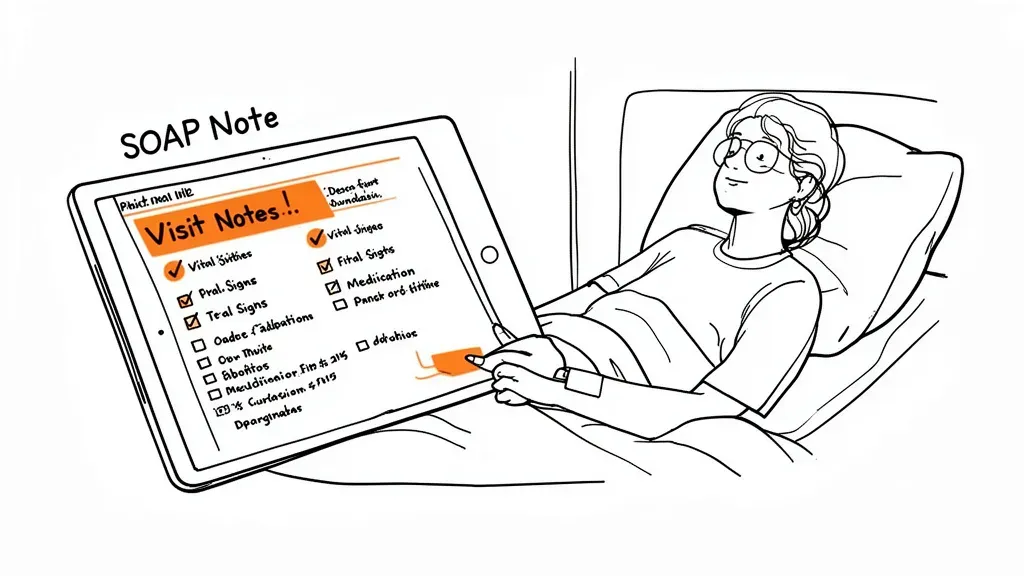
A field nurse completes a visit and dictates a quick voice note or types a brief summary into the Telegram bot: "Mrs. Johnson, 84, diabetic foot wound check. Wound 2cm x 1.5cm, pink granulation tissue, no drainage. BP 138/82, HR 76. Changed dressing with Mepilex. Patient tolerating well. Next visit Thursday." Castor converts that into a structured SOAP note:
- Subjective: Patient denies pain at wound site, reports appetite improved.
- Objective: Wound 2cm x 1.5cm, pink granulation tissue, no purulent drainage. Dressing changed with Mepilex. BP 138/82, HR 76 regular.
- Assessment: Diabetic foot wound healing, Stage II, improving.
- Plan: Continue wound care per 485. Follow-up Thursday. Report to MD if increased drainage or signs of infection.
That note gets saved to the patient's local memory thread — fully searchable via Castor's hybrid vector/BM25 engine across 50+ document formats.
Medication Administration Records
When Castor ingests the physician's 485 Plan of Care (uploaded as PDF), it extracts the medication list and builds a local MAR template. Field nurses confirm administration via Telegram: "Gave Mrs. Johnson metformin 500mg oral with lunch, 12:15pm." Castor timestamps, formats, and appends to the patient's medication record. The full MAR is always queryable: "Show me Mrs. Johnson's insulin administrations this week."
OASIS Assessment Support
OASIS has 110 items at Start of Care (M0010-M2401). Castor can ingest a prior OASIS as a PDF, extract the structured data into patient memory, then surface the relevant prior-period values when a clinician starts the recertification OASIS. This cuts recertification documentation time significantly — the clinician only needs to update items where status changed, not re-enter everything from scratch.
Prior Authorization Tracking
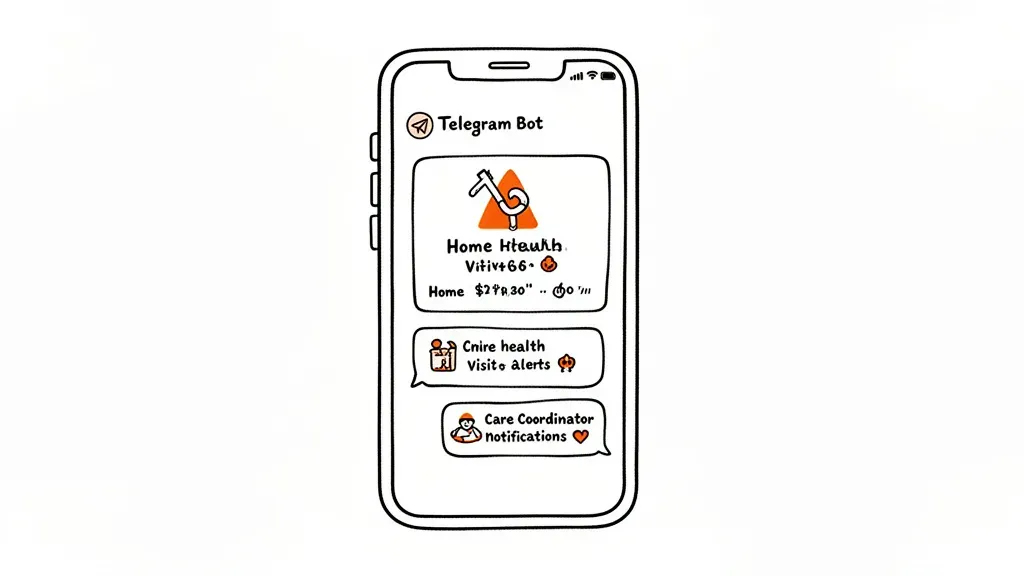
Castor runs a scheduled routine each morning that scans the local patient list and flags any patient whose Medicare or Medicaid authorization is expiring in the next 14 days. The care coordinator gets a Telegram alert: "AUTH EXPIRING: Martinez, Elena — Medicare HH authorization expires June 18. Recertification orders needed from Dr. Reyes." That routine runs at 08:00 daily, entirely offline, without polling any cloud dashboard.
The Telegram Bot as Your Field Communication Layer
Home health's core coordination problem is geography: your clinical staff is scattered across a city, submitting documentation via text message, phone call, or whatever field app your EHR vendor provides. Castor's Telegram bot turns that scattered communication into a structured local database.
Field staff message the bot directly from their phones — no app install, no VPN, no separate login. The bot runs on your agency's local machine (or a small on-premise server) and receives messages via the Telegram API. The PHI never touches Telegram's servers beyond transit — the bot processes and discards messages locally, storing only what it ingests into the patient memory.
Visit Confirmation and EVV Data Capture
Under the Cures Act EVV mandate, the following must be captured per visit: patient identity, service type, date, location (GPS or address), start time, end time, and provider identity. A simple Telegram message workflow covers this:
- Field nurse messages on arrival: "Arrived Johnson 14 Oak St 09:32" — Castor records arrival location and time
- On departure: "Left Johnson 10:45" — Castor records departure, calculates visit duration, flags if under 30 minutes for Medicare skilled nursing minimum
- Any documentation gaps trigger a Telegram reminder back to the nurse before end of day
Missed Visit Detection
Castor's scheduled routines can flag when a nurse hasn't checked in for a patient whose visit was scheduled. By 15:00 each day, if a patient has a scheduled visit with no arrival confirmation in the thread, the care coordinator gets an alert. No manual status board required.
Coordinator Dashboard via Telegram
Care coordinators query the local knowledge base directly: "Which patients have skilled nursing visits tomorrow?" "Who is Mrs. Johnson's primary nurse?" "Show me all visits for patient ID 0042 this week." Castor answers from local memory in under two seconds — the same response speed you'd get from a cloud EHR, without the cloud dependency.
Hardware Requirements and Setup
Castor runs on any machine with 4-8GB VRAM. For a home health agency office, a $600-$900 mini PC or gaming laptop running Windows 10/11, Linux, or macOS is sufficient. Recommended models for home health documentation (strong instruction following, long-context handling): Qwen3 9B or Gemma4 E4B via LM Studio or Ollama.
Setup steps:
- Install Castor from github.com/deepfounder-ai/castor
- Run
castor --doctorto verify all 20+ system components are active - Connect the Telegram bot (one bot token per agency) — Castor handles the webhook setup
- Ingest existing patient records:
/ingest path/to/patient_files/— Castor processes PDF, DOCX, and CSV formats - Set up the daily prior-auth check routine: "Every weekday at 08:00, check patient list for authorizations expiring in 14 days and message @care_coordinator"
Field staff need zero setup — they interact only via Telegram, the same app they likely already have on their phones.
For agencies managing multiple clinicians and 50+ active patients, Castor's 3-layer memory system (raw facts to entity extraction to synthesized wiki pages per patient) keeps retrieval accurate even at scale. Searches use hybrid vector + BM25 — meaning both semantic similarity ("find notes about wound healing progress") and exact keyword lookup ("show all metformin administrations") work reliably.
If you're running a home health agency that's HIPAA-constrained and tired of paying per-seat cloud EHR fees for field staff who spend half their day offline anyway, Castor is worth running through a 30-day pilot on your existing hardware. The documentation overhead doesn't disappear, but it shifts from a manual burden to a structured local workflow your entire team can query instantly.
Related reading: How Castor handles 42 CFR Part 2-protected SUD records for addiction treatment centers — the same offline-first approach applied to even stricter federal privacy rules. Also see Castor for physical therapy clinics for how visit documentation adapts to functional outcomes and ROM tracking.
Frequently Asked Questions
Is Castor HIPAA compliant for home health agencies?
Castor runs entirely on your local hardware with no cloud transmission of patient data. Because no PHI leaves your network, you eliminate the largest HIPAA breach risk vector. You will still need a Business Associate Agreement with any third-party tools in your stack, but Castor itself requires no external server connection for core documentation functions.
Can Castor handle Electronic Visit Verification (EVV) requirements?
Castor can capture and structure the data elements required by the 21st Century Cures Act EVV mandate: patient identity, service type, visit date, location, start and end times, and clinician identity. Field staff submit via Telegram; Castor timestamps, formats, and stores locally. This does not replace a state-certified EVV aggregator if your state requires one, but it provides the local record from which you export to that aggregator.
What hardware does a home health agency need to run Castor?
A machine with 4-8GB VRAM GPU, 16GB RAM, and an SSD running Windows 10/11, Linux, or macOS. A $600-$900 mini PC or used gaming laptop handles a caseload of 50-100 active patients comfortably. LM Studio or Ollama must be installed to serve the local language model.
How does Castor handle poor internet connectivity in the field?
Field staff interact via Telegram, which queues messages when offline and delivers them when connectivity resumes. The AI processing and record storage happen on the agency's local machine — not on the field nurse's device — so field connectivity only affects message delivery, not data integrity or AI quality.
Can Castor replace a full home health EHR?
Not entirely. Castor handles documentation, memory, scheduling alerts, and coordinator communication. It does not process Medicare/Medicaid billing, generate 485 forms in the exact CMS-mandated format for physician signature, or submit OASIS data directly to CASPER. Most agencies use Castor as an AI documentation layer alongside a lightweight EHR for billing and regulatory submissions.