

Castor for Oncology Practices: Offline AI That Tracks Chemo Cycles and Prior Auth Without Cloud Risk
Castor runs entirely on your practice hardware — no PHI in the cloud. It tracks chemotherapy cycles, handles REMS compliance for lenalidomide and thalidomide, drafts prior auth packets for Keytruda and Herceptin, and monitors between-cycle labs via Telegram alerts.


Oncology practices handle the most sensitive medical records in any clinical setting — a cancer diagnosis follows a patient for life. Yet most oncology EHR systems sync patient data to cloud servers, third-party analytics platforms, and vendor-operated AI tools. Castor changes that: it runs entirely on the practice's own hardware, keeps every chart local, and still handles the documentation work that consumes hours of clinical staff time each day.
This post covers how a medical oncology or hematology/oncology practice can deploy Castor to manage treatment cycle documentation, prior authorization for high-cost biologic agents, REMS compliance, and between-cycle lab monitoring — with zero PHI leaving the building.
Why Offline AI Is Non-Negotiable for Oncology Data
Cancer diagnosis data is uniquely sensitive. Under HIPAA, oncology records fall under standard PHI protections — but the real risk is broader. A patient with a Stage III breast cancer diagnosis or a multiple myeloma treatment history faces real-world consequences if that data leaks: insurance underwriting discrimination, employment barriers, and social stigma. As of May 2026, 38 states have enacted additional genetic and medical privacy statutes that impose breach penalties beyond federal HIPAA minimums.
Cloud-based EHRs and AI tools create exposure at every API call. Castor eliminates that surface entirely. It runs on a Windows, macOS, or Linux workstation inside the practice — no internet required for inference. The model runs locally (Qwen 3.5 9B or Gemma 4 E4B on 8 GB VRAM), all patient memory is stored in a local Qdrant vector database, and all file processing happens on-device.
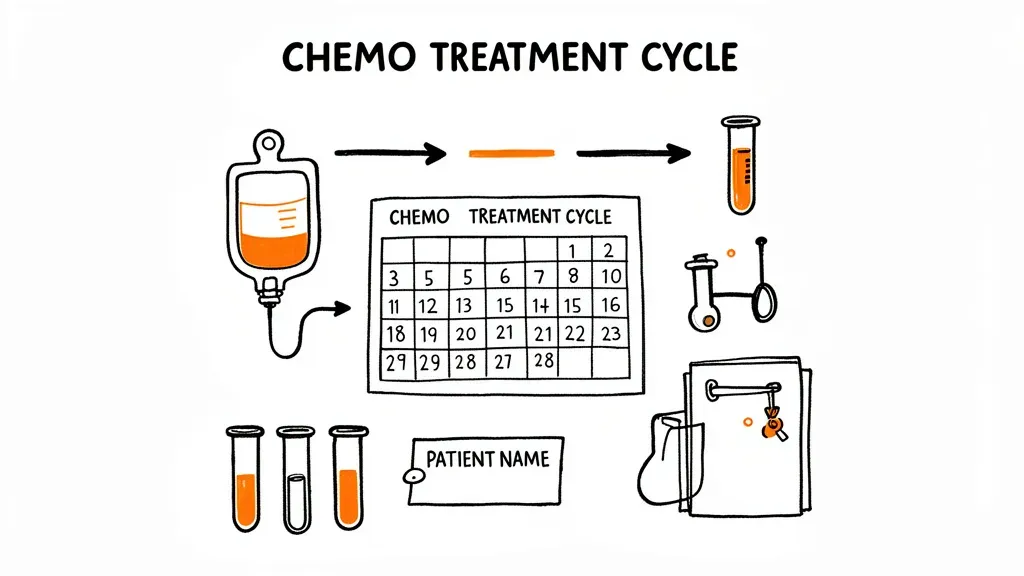
Treatment Cycle Documentation and Scheduling
Chemotherapy and immunotherapy regimens are complex. A patient on FOLFOX for colorectal cancer has treatment every 14 days, with CBC and metabolic panel required 48–72 hours before each infusion. A patient on Keytruda (pembrolizumab) monotherapy gets dosed every 3 or 6 weeks, with thyroid function and hepatic panels at specific intervals. Tracking this manually — or hoping the EHR flags it — is where things fall apart.
Castor's 3-layer memory system handles this automatically. Once a treatment protocol is entered, Castor creates a structured timeline entity in its local Qdrant vector database. Using its scheduled routines feature, it checks each morning which patients have lab draws due that day or the next, which infusions are scheduled, and whether any CBC or metabolic panel results have been received. It sends a Telegram notification to the charge nurse's phone — no app install needed beyond Telegram, which already runs on every staff device.
Example scheduled routine (set once via Castor's natural language scheduler):
Daily 07:30: Check all patients with infusion appointments in the next 48 hours.
Flag any patient missing required pre-infusion labs. Format as a numbered list with
patient ID, appointment time, and which labs are outstanding. Send to Telegram.
Castor also maintains dose modification records. If a patient experiences Grade 2 peripheral neuropathy during FOLFOX and the oncologist reduces the oxaliplatin dose by 25%, that modification is captured in the patient's memory entity, referenced automatically on future cycle documentation, and included in any insurance appeals for treatment continuation.
Prior Authorization for High-Cost Oncology Agents
Prior authorization is the most time-consuming administrative task in any oncology practice. A single prior auth for pembrolizumab (Keytruda) for first-line non-small cell lung cancer can require 15–20 pages of documentation: pathology reports confirming PD-L1 expression ≥50%, radiology reports confirming stage, treatment history, ECOG performance status, and the specific ICD-10 diagnosis codes (C34.10 for unspecified NSCLC). For immunotherapy combinations — nivolumab + ipilimumab (Opdivo + Yervoy) — each agent requires separate prior auth from most commercial payers.

Castor handles this by ingesting all relevant documents into its local memory — pathology reports (PDF), radiology dictations, previous treatment records — and then drafting the prior auth packet from that memory. The oncologist reviews and signs; Castor handles the formatting and payer-specific requirements. Using browser automation via Playwright MCP, Castor can also navigate payer portals directly, pre-filling the PA form fields from its local memory and taking screenshots of submission confirmations.
Common oncology agents requiring complex prior auth that Castor manages documentation for:
- Pembrolizumab (Keytruda) — PD-L1 IHC results, tumor mutational burden, MSI status where applicable
- Trastuzumab (Herceptin) — HER2 3+ IHC or FISH amplification documentation, cardiac function baseline
- Bevacizumab (Avastin) — prior chemotherapy lines, blood pressure monitoring documentation
- Lenalidomide (Revlimid) — REMS enrollment verification (see next section), complete blood count windows
- CDK4/6 inhibitors (Ibrance, Verzenio, Kisqali) — HR+/HER2- confirmation, prior endocrine therapy documentation
For payers using a utilization management vendor (Magellan Rx, Onco360), Castor tracks the specific portal and submission format required, stores that in its memory alongside the patient record, and uses it when re-authorizations come due — typically every 3–6 months for ongoing therapies.
REMS Compliance Without Cloud Tools
Several oncology agents require enrollment and ongoing compliance in FDA Risk Evaluation and Mitigation Strategies (REMS) programs. These programs mandate specific documentation before each prescription or dispensing: patient enrollment verification, lab results within defined windows, and prescriber certification. Failure to comply can result in regulatory action and is a patient safety obligation, not just an administrative one.
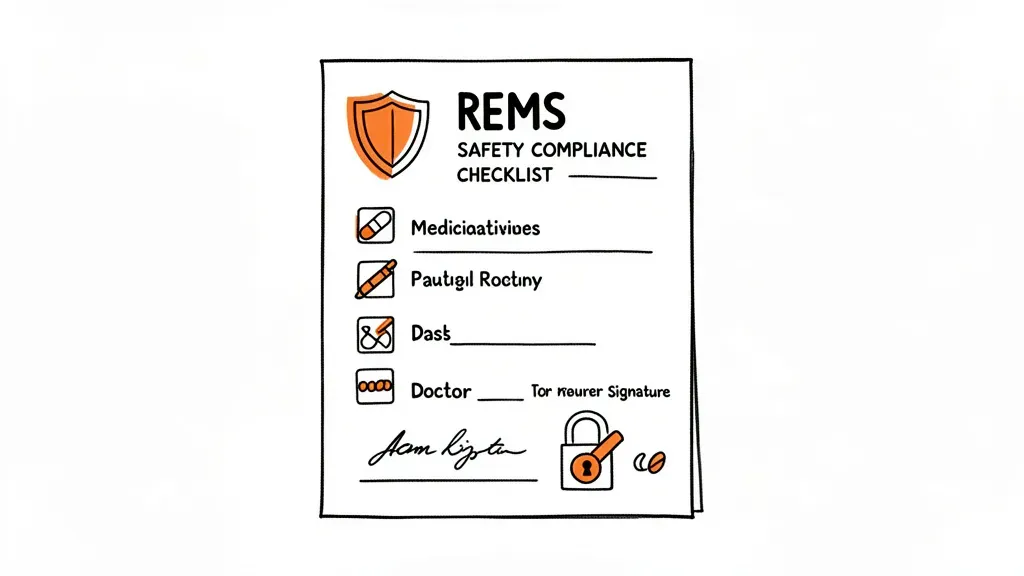
The problem with most REMS-tracking tools is that they're cloud-based third-party platforms — another external system holding oncology PHI. Castor replaces that entirely with local compliance tracking:
- Lenalidomide/thalidomide (RevAssist/STEPS REMS): Castor tracks female patient pregnancy test results within the required 10–14 day window before each 28-day supply, stores the lab dates and values locally, and flags any prescription that would fall outside the compliance window. Prescriber and patient authorization codes are stored in encrypted local secrets.
- Carfilzomib (Kyprolis): Castor monitors cardiac monitoring documentation between cycles per REMS requirements.
- Tretinoin in APL (ATRA): Tracks the specific lab monitoring schedule during induction therapy.
Each morning, Castor's scheduled routine checks for any REMS-enrolled patient with an upcoming prescription renewal and generates a compliance checklist showing which requirements are met and which are pending. This replaces a manual spreadsheet that is typically out of date by the time the prescription is written.
Lab Monitoring Between Cycles
Neutropenia, thrombocytopenia, hepatotoxicity, and nephrotoxicity are expected toxicities of many chemotherapy regimens. The oncology team needs to review CBC and metabolic panels before each cycle and after specific checkpoints. This requires knowing which results are back, what the absolute neutrophil count (ANC) is, and whether dose modification criteria are met.
Castor ingests lab result PDFs (or HL7-formatted exports from the lab system) into its local memory. When the oncologist asks "Is Mrs. Chen ready for cycle 3 of FOLFOX?", Castor pulls her most recent CBC from memory, calculates ANC (ANC = WBC × [%neutrophils + %bands] / 100), checks whether ANC ≥ 1,500/μL and platelets ≥ 75,000/μL (FOLFOX hold criteria), and returns a one-line answer with the lab values and dates. If labs are borderline, it surfaces the relevant NCCN dose modification table entry from its reference document store.
This same workflow applies to hepatic function monitoring for patients on targeted agents (ALT/AST thresholds for tyrosine kinase inhibitors), renal function monitoring for cisplatin-containing regimens (creatinine clearance calculation), and cardiac monitoring for anthracycline cumulative dose tracking (lifetime doxorubicin dose in mg/m²).
Survivorship Care Plans
The American Society of Clinical Oncology (ASCO) and the Commission on Cancer (CoC) accreditation standards require that cancer patients who complete curative-intent treatment receive a survivorship care plan (SCP) — a document summarizing their cancer history, treatments received, late effects to monitor, and a recommended follow-up schedule.
Generating an SCP manually requires pulling together 6–18 months of treatment records. Castor does this automatically. Because all treatment records, lab results, and side effect documentation have been captured in local memory throughout the treatment course, Castor can generate a structured SCP draft in minutes, referencing the ASCO survivorship care plan template format. The oncologist reviews, edits, and signs — and the SCP is saved to the patient record, also locally.
For follow-up scheduling, Castor's scheduled routines handle the recurring surveillance work: flagging patients who are due for post-treatment imaging (CT chest/abdomen/pelvis at 12-month mark), bloodwork (tumor markers like CEA for colon cancer surveillance), or clinical visits, and sending Telegram reminders to the scheduling desk.
What Castor Does Not Replace
Castor is a documentation and workflow automation agent, not a clinical decision support system. It does not:
- Recommend treatment regimens or dose selections
- Interpret pathology or radiology findings
- Adjudicate clinical eligibility for clinical trials
- Replace the oncologist's clinical judgment on any dose modification
It also does not connect to the EHR directly — it works alongside it, processing documents exported from the EHR (or scanned from paper charts) and generating documents that are then imported back into the EHR. This keeps the workflow simple and the integration surface minimal.
Setup Requirements
Castor runs on a Windows, macOS, or Linux workstation. Hardware requirements: 16 GB RAM and a GPU with 6–8 GB VRAM (a mid-range gaming GPU is sufficient). Installation takes under 30 minutes following the GitHub setup guide. The recommended model for oncology documentation is Qwen 3.5 9B via LM Studio — it handles complex medical terminology accurately and runs at ~35 tokens/second on 8 GB VRAM.
For practices handling high REMS volumes or multi-site operations, Castor supports cloud fallback via OpenRouter or Groq, still with all patient memory staying local — only the inference call goes to the cloud API, and it can be anonymized at the prompt level before transmission.
Castor is open source and free to use: github.com/deepfounder-ai/castor.
Frequently Asked Questions
For more on how Castor handles other healthcare specialties, see our posts on Castor for Psychiatry Practices and Castor for Pain Management Clinics.